Schedule
Book a telehealth appointment from wherever you are. No insurance necessary.

 Main Menu
Achieve your weight-loss goals with GLP-1 treatments like Wegovy® and Zepbound®, guided by licensed providers every step of the way.
Personalized care for women, with HRT and lifestyle support to ease menopause symptoms and restore balance.
Personalized care for men, with treatments for testosterone, sexual health, hair loss, and more.
Simple, supportive mental health care on your terms, including access to prescription medication when appropriate.
Care without the wait—connect 24/7 with licensed providers for same-day prescription refills and common concerns like colds, flu, rashes, and more.
Talk to a doctor anytime, anywhere — 24/7 urgent & primary care with a telehealth visit in under one hour.
Get your medication prescribed online and sent same-day to your local pharmacy for pickup.
Save time, money, and the hassle — no in-person visits or insurance required.


Prescription treatments are tailored to your specific condition, ensuring effective relief.

Urgent evaluation is crucial to identify your condition early and prevent complications.

Accurate testing, if needed, can confirm your diagnosis and guide the best course of treatment

Licensed providers can send prescriptions to your local pharmacy within an hour, day or night.

step 1
Book a telehealth appointment from wherever you are. No insurance necessary.

step 2
Meet with a board-certified doctor or nurse practitioner from your mobile device.
step 3
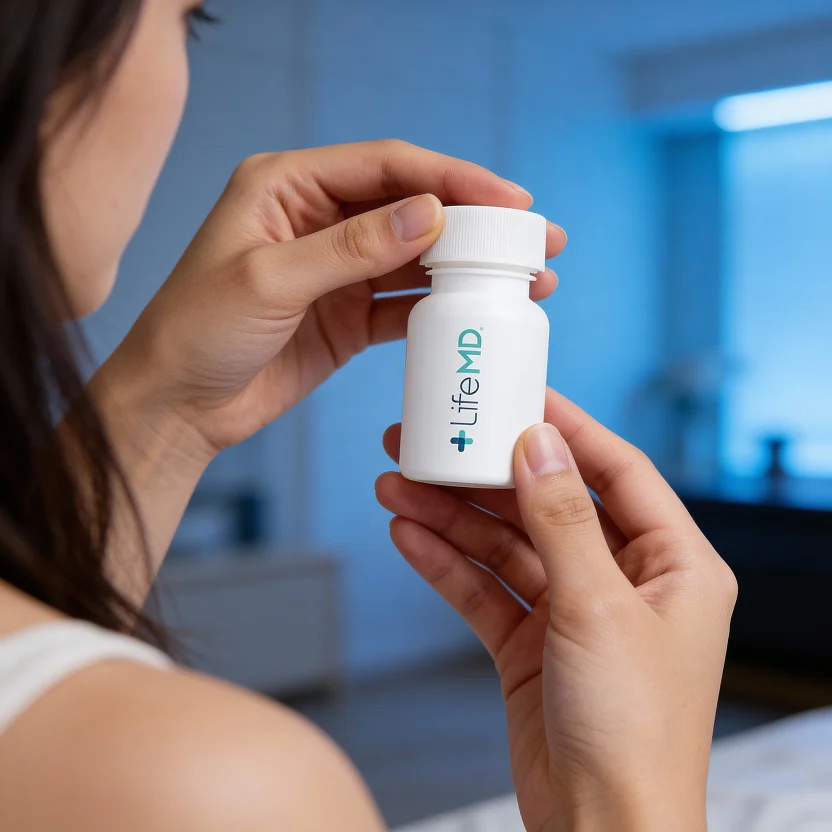
Get a prescription if needed (save up to 90%), and pick it up at your pharmacy.
Pink eye, also known as conjunctivitis, is characterized by inflammation of the conjunctiva (the thin, transparent tissue that covers the white part of the eye and lines the inside of the eyelids.) A variety of factors can contribute to pink eye, such as bacteria, viruses, allergens, or irritants.
Common symptoms of pink eye include redness, itching, tearing, discharge, and a gritty sensation in the eye. Whether or not pink eye is contagious, and the appropriate course of treatment, all depend on the underlying cause. A licensed healthcare provider can help you determine what’s causing your pink eye so you can find relief.
Get Started Get Started
Total Cholesterol

37 mg/mL
In range

LDL (Low-Density Lipoprotein)
47 mg/mL
In range

Triglycerides
158 mg/mL
Above range


Prescription antibiotic eye drops, such as ofloxacin (Ocuflox) or moxifloxacin (Vigamox) – or ointments, such as erythromycin or bacitracin – help treat bacterial conjunctivitis by killing the bacteria responsible for the infection.
Prescription antihistamine eye drops – such as olopatadine (Patanol) or azelastine (Optivar) – can help relieve itching and redness associated with allergic conjunctivitis by blocking the effects of histamine.
Eye drops containing mast cell stabilizers – such as nedocromil (Alocril) or lodoxamide (Alomide) – help prevent the release of histamine and other inflammatory substances, reducing symptoms of allergic conjunctivitis.
“Dr. Puopolo is a very knowledgeable doctor with vast experience in different medical fields. I feel I am in good hands.”
Verified Patient

“Great experience!! Never have done online telehealth before but for sure will again :)”
Verified Patient
“Dr. Culpepper was amazing. He explained things to me that I didn’t understand.”
Verified Patient
“Dr. Sehgal was amazing! Super helpful. She was answering my questions before I even asked. Very happy I picked her.”
Verified Patient
"The appointment went great. It was quick and easy, and the doctor was right on top of things!"
Verified Patient
Reviews shown are from verified LifeMD patients across various services. Photos are for illustrative purposes only.

Pink eye can be caused by bacterial or viral infections, allergies, or exposure to irritants (such as smoke, chlorine, or cosmetics). The specific cause determines whether pink eye is contagious and what treatment approach should be taken.
Treatment for pink eye depends on the cause. Bacterial conjunctivitis typically requires antibiotic eye drops or ointments, while viral conjunctivitis usually resolves on its own. Allergic conjunctivitis can be treated with antihistamine eye drops or mast cell stabilizers. For cases of pink eye caused by irritants, flushing the eye with water or saline solution may help provide relief.
Pink eye can be contagious if it’s caused by bacterial or viral infections. In these cases, it’s important to practice good hygiene – such as washing your hands frequently and avoiding touching your eyes – to prevent the spread of the infection to others. Allergic conjunctivitis and irritation-induced conjunctivitis are types of pink eye that are not contagious.
To help prevent pink eye, you can take the following steps: practice good hand hygiene; avoid touching your eyes, and refrain from sharing personal items such as towels, makeup, or contact lenses. If you have allergic conjunctivitis, try to minimize exposure to allergens by using air filters, washing bedding frequently, and avoiding outdoor activities when the pollen count is high.
Consult a healthcare professional if you have severe or worsening eye pain, sensitivity to light, blurred vision, intense eye redness, or symptoms that don’t improve with treatment. Additionally, newborns with symptoms of pink eye should receive immediate medical attention, as some forms of conjunctivitis can cause severe complications if left untreated.
Yes, you can go outside with pink eye. However, it’s essential to take precautions to prevent the spread of the infection, as some forms of pink eye can be contagious. If you have viral or bacterial conjunctivitis, avoid close contact with others, and wash your hands frequently to minimize the risk of transmission. In addition: Avoid touching your eyes and sharing personal items, such as towels, pillows, or makeup. If your pink eye is caused by allergies, it is not contagious – but it’s still important to practice good hygiene in order to prevent irritation and worsening of symptoms.

Family Medicine
4.93 stars 170 reviews

Internal Medicine
4.98 stars 178 reviews

Internal Medicine
4.92 stars 261 reviews

Family Medicine
4.94 stars 178 reviews

Hormone Specialist
4.92 stars 163 reviews